







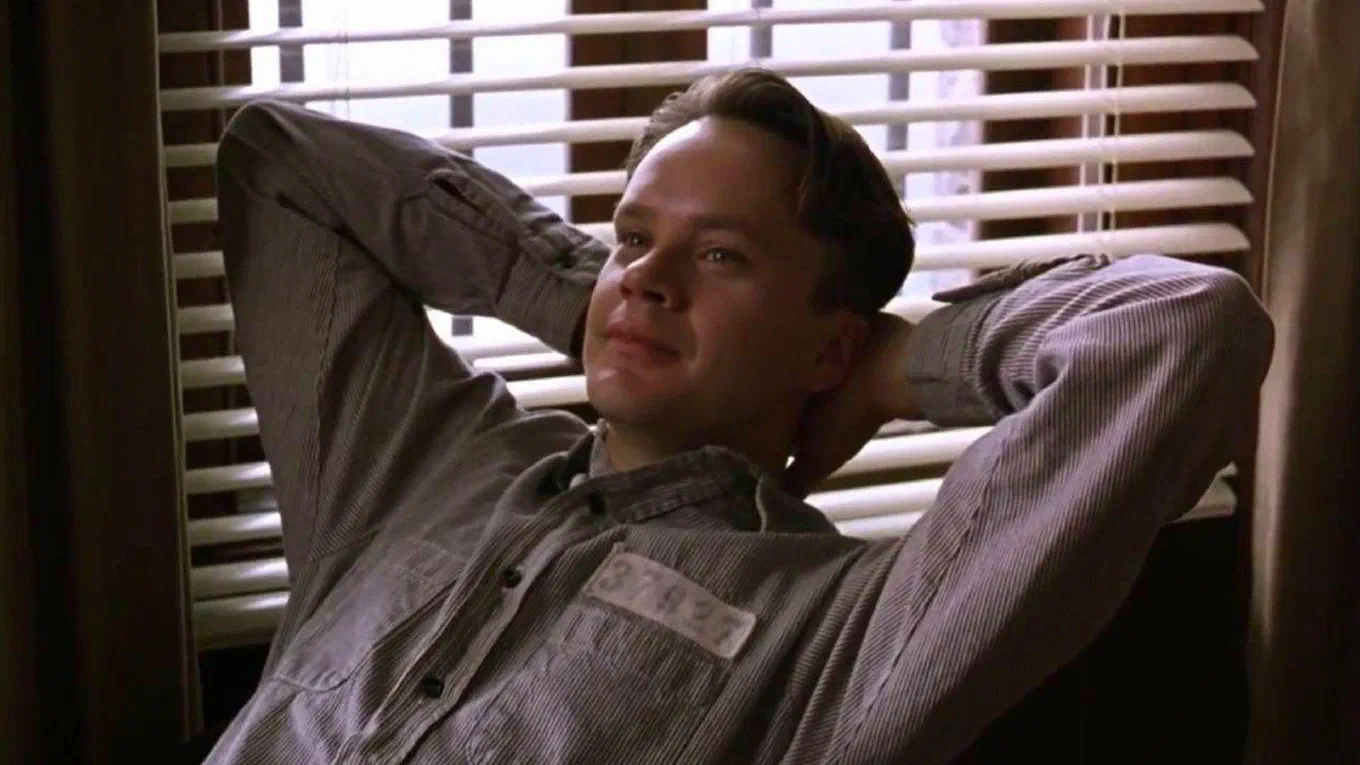
I recently re-watched Shawshank Redemption, and am reminded once again why this is, in my opinion, one of the best films ever made. While there are many aspects of this film that make it great—such as the acting, character development, and the honest examination of prison life—today I want to focus on what is arguably the most significant aspect of the film—the theme of hope; specifically, hope for something better, hope for the emancipation of the spirit, despite the overwhelming evidence against the contrary. But first, let us go over a plot outline for the film.
(Warning: spoilers abound!)
The film centers around Andy Dufresne, a man imprisoned for murdering his wife and her lover, and Elis “Red” Redding, another man convicted of murder. While life on the inside is initially extremely tough for Andy, he eventually curries favor with the guards by providing them with financial advice. Eventually, through his persistence and refusal to submit himself to the mundanity of prison life, he helps to build a library for the inmates for their enjoyment. Eventually, he even manages to help many others get their high school equivalencies, preparing them for stepping away from a life of crime once they’re released from prison.
There is, however, one major catch to Andy’s predicament—Andy is in fact innocent of the crime he was accused of committing, as revealed by one of his fellow inmates who heard a confession by the actual murderer. Andy delivers this news to the prison warden, who shuts him down and kills the fellow inmate who could have provided the evidence for overturning Andy’s conviction.
Under these circumstances, most anyone—myself included—might have given up. Indeed, Andy later asks a fellow inmate for a length of rope, and it is heavily implied that he will use this to hang himself. But Andy being Andy, he has other plans, and those plans involve a prison escape. In a wonderful scene, in which Andy crawls through sewage to reach freedom, he exposes the corruption going on at Shawshank Prison by mailing revealing documents to the press, and Warden Norton kills himself. Red, inspired by Andy’s philosophy of hope, gets his parole approved and reunites with Andy off the coast of Mexico.
Alright, now that that’s out of the way, it’s time to talk about my favorite subject—philosophy. Andy and Red are essentially on two ends of what I will call the Spectrum of Hope. First and foremost, it’s useful to define what is meant by the term “hope”. In the traditional sense, “hope” might be defined as the positive expectation for something, be it a prospective new partner, a pay raise, or simply the desire to find an object we were looking for. But the idea of hope in the film is not so simple. Because for Andy, “hope” does not simply mean the hope of one day getting out of prison, but is more so an orientation towards life. One particular scene in the movie comes to mind, when talking about this, which is the famous opera scene.
Upon receiving donations from his locality for a list of donations for his library, Andy rebels against the prison establishment by playing an opera song over the PA system. (It truly is a wonderful scene, and I encourage you to watch it here: https://youtu.be/Bjqmg_7J53s). Being the first time the inmates had heard any music in years, the whole prison stops to admire the music. After spending two weeks in solitary confinement, Andy returns to tell his fellow inmates that it was the easiest time in solitary he had ever done, because the music inspired him in a particular way. When pressed by Red about what precise feeling he is referring to, Andy replies it was hope that kept him going. Surely, Andy does not mean that he hopes he will be let out of solitary sooner than expected, or that the experience will not be as bad as he imagined it would be. Thus, taken in this context, hope is not merely the expectation for something good. What, then, does Andy mean?
I think Andy’s use of the word “hope” can be taken to mean something like this: it is the refusal to let your circumstances define you. It is the blanket rejection of objectivity, the denial that you are what society condemns you to be.
Indeed, in many ways, Andy defies expectations for what might be expected of him in his situation. To have both the courage and persistence to build a chess set from polishing rocks, let alone building an entire library for the inmates—this takes a level of fortitude that I’m not sure I have have. But it is a character strength, a virtue, that all of us can aspire to—to never give up, to deny causality itself. It is something of which I have much to learn from Andy Dufresne.
What are your thoughts on my analysis of hope in Shawshank Redemption? Feel free to let me know your thoughts at jakes-blog.selection732@silomails.com.